Showing posts with label Martu. Show all posts

Sunday, May 17, 2015

Apply The Lesson, Please!

Red Scarf Girl
Ji-li Jiang
Week 5
Literary Analysis

Towards the beginning of the novel, when the main character, Ji-li, is still unclear about her family background and insecure about herself, she chooses to join his classmates in protesting, even though she knew it wasn't the appropriate thing to do. 
"The class was divided into two groups [...] The other group was going to challenge Jiang Xi-wen, an unpleasant woman who lived in a house behind the school yard. I was assigned to the group going to Jiang Xi-wen’s house. Of course, this was not a coincidence, not at all. They all knew that she was my relative."
This proves that she is as hurtful as the classmates she constantly criticises throughout  the whole book. Not only is she disrespecting her elders, but she's neglecting her values for a cause she's not passionate about. What this is showing is that in the beginning, she is unstable and unable to be herself in a world that's constantly trying to change her. She crumples at the sight of disapproval and her urge to fit in grows. So in order to do so, she believes she must change to be like everyone else even if it means pretending to be someone she's not.
Link
She began to put the puzzle together that what she was
doing wasn't right. Also, she would never fit in because
she was different in a special way. 
Later, she finally begins to put the puzzle pieces together, she learns how hurtful those protest and da-zi-baos are by experiencing it herself. As two of her classmates write a spiteful one about her and post it on the school walls for everyone to see, she begins to understand that she shouldn't care about what others think about her. Obviously, she gets offended although she doesn't regret her actions. She is judged for simple things that would seem normal in our world today, such as her family background and being respectful to the teachers.
Link
Ji-li had the opportunity to fail, by following the crowd
or take a risk and be who she truly was. 
On the other hand, her respect is rewarded when her teacher attempts to send her and her best friend to their dream university. Even though this dream is not accomplished, Ji-li finally realizes that she doesn't have to change, and she shouldn't allow people to judge her for her past because she can't change it. For example, her grandfather's job, there's no possible way for her to change the fact that he was a landlord. But what she can change is little things, such as s protesting against things she doesn't believe. She's not her past, therefore she shouldn't be judged for it. One can't erase their mistakes, but only learn from them. In order for Ji-li to have grown so much she had to have made silly mistakes such as hurting her aunt Jian Xi-wen and that lead to her taking new risks because in every mistake there's potential for growth. In the past, you learn the lesson, but in the future you apply it.

Wednesday, May 13, 2015

The Truth About The Revolution- Risk-taking Researcher


Da-zi-bao Source
Da-zi-bao 大字报
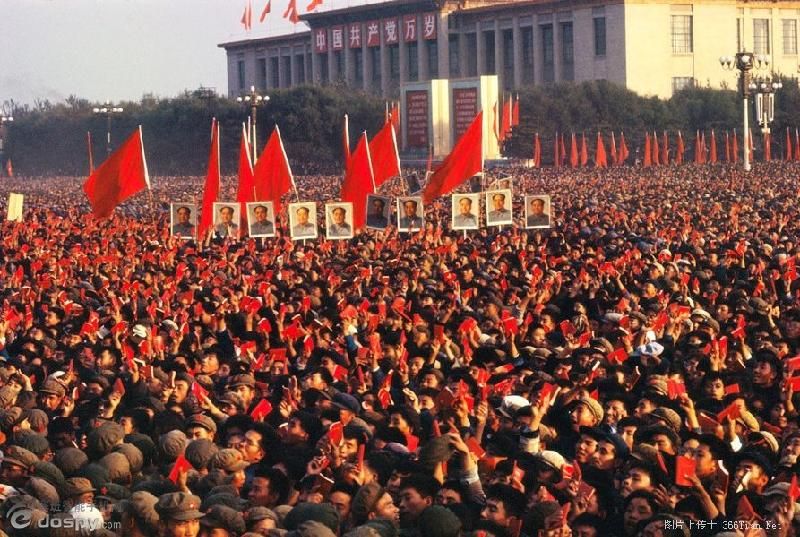
Their direct translation to English would be big-character posters. Wikipedia describes them as handwritten, wall-mounted posters used to protest. These became a method of propaganda in 1966 during the Chinese Cultural Revolution because of how people optimized its powers and made it into propaganda, promoting hateful statements against the Four Olds. Da-zi-baos became so popular and important that even Chairman Mao wrote one of his own on August 5th, 1966, seeking the help of his people to "Bombard the Headquarters" and it was directed towards Liu Shaqoi and Deng Xiaoping, who where the government affairs who calmed the people down in China. After that, da-zi-baos popularity begun to be seen throughout all of China, but for different reasons. One might think that as time passed they would lose their importance, but on the contrary for they were now used as sophisticated debate to satirical entertainment to rabid denunciation; being attacked in a big-character poster was enough to end one's career. This is why when Ji-li sees that her classmates wrote hurtful da-zi-baos about some of her family members, favorite teachers and her she gets so upset and worried. 


Red Guard Source
Red Guards 
The idea of the Red Guards begun in 1966 with a small group of students in Beijing and it's original name was "Chairman Mao's Red Guards." Chairman Mao supported the idea and sanctioned his own groups known as "Red Guards" whose main purpose was to rebel against the system all over China. They would dress in old army jackets and wearing red armbands and would constantly chant "Long Live Chairman Mao!" But bBefore they could commence their servings in the group, it would be mandatory to swear ultimate protection of Mao and his revolutionary line. 
Red Guards were unnecessarily violent causing them to turn on each other and that resulting in great numbers of lives lost. The few who survived, and had completed their servings were involuntarily taken from their cities and dragged to the countryside where they would be re-educated by peasants. Many say that the Red Guards were the one of the most violent factors of the Chinese Cultural Revolution. 


Sunday, April 26, 2015

Inspiration = Determination

Historical Context

"This award-winning memoir of a shattered childhood recalls a haunting time which chills the soul. At almost every turn, we listen to the heart-pounding struggle of a little girl, and her struggle between her belief in Chairman Mao and the Communist Party, and her beloved family " (SOURCE).

Source
Chairman Mao.

Source
Chinese Cultural Revolution 1966-76

Red Scarf Girl, written by Ji-li Jiang, is a memoir written about her own experiences while facing the various struggles that made up her childhood, for she was young and didn't understand much about the Chinese Cultural Revolution. This revolution began when Ji-li was only twelve, and by the time she was twenty-two it was finally over. As a result, the vast majority of her childhood was lived under the political movements that Mao Zedong, Chairman of the Communist Party of China decided to imply in China. His objective was to purge all communists and traditional elements from his society because they didn't fit in with the "true" Communist ideology (SOURCE). This caused the Jiang, and thousands of other families throughout China to be binded from their everyday routines. Such things using face cream, having long hair, having a housekeeper, using old Chinese words, respecting teachers, having a store with a name that demanded progress or wealth, being superstitious, dressing with the old fashion were all prohibited and a punishment was earned if caught. All of these simple, but common elements of "the old Chinese Culture" made part of Ji-li's life, and couldn't simply be left behind and forgotten. This could've inspired her to write about the struggle of trying to conform in a society that doesn't give its people the liberty of choosing the way they want to live their lives. By establishing this rule during the revolution, Ji-li was influenced to share her story of how she was a survivor. Now, she's happily living in the USA, having won various awards such as Best Books for Young Adults,1998 Parents' Choice Gold Award, 1998 Books of Distinction, along with thirteen more, just for Red Scarf Girl (Source). In conclusion, as she shared her story with the world, she inspired people throughout the world to keep looking forward because it does get better.

Wednesday, April 22, 2015

Connection Captain - Martu

Red Scarf Girl 
by Ji-Li Jiang 
Chapters 3 & 4 

About The Book
Source
Diary of Anne Frank.
So far, Red Scarf Girl, shares many interesting ideas with The Diary of Anne Frank. Not only because they are both written from a young girl's perspective, but also because they are both breath-taking true stories. Both authors, Ji-Li Jiang, and Anne Frank,  expose their life experiences by sharing their challenging life stories, during in bright and dark times. They tempt to leave the audience wondering more about the certain event in time they are revealing. Also, in a way, they both give the reader a more "personal" reason to care about the brutal events that happened long ago. This resulting in censorship because their content of truth scared the leaders. They are both such strong books, that the only way to stop their revealing content from dividing communities and turning against each other was to ban them. 

About The Author
Ji-Li Jian Information
Ayn Rand Information
Ji-Li Jiang, just like Ayn Rand author of Anthem, can be seen as a very bright women who chose to contribute to their societies by sharing their troubling life stories during tough times. Ji-Li Jiang, lived through the Chinese Cultural Revolution while Ayn Rand lived through the Russian Civil War, Revolution and many other tragic events in history. The world has been very fortunate to have been able to acquire their knowledge and experiences through writing. Some may say that their writing gives people hope because once one reads about such complicated times, they begin to appreciate the simple things in life. Not everyone has the chance to read first-hand experiences from such tragic events because many died in the process. Therefore, in a way, Ji-Li Jiang and Ayn Rand are motivators because through their writing they make people feel fortunate, learn and reflect on the past, so nothing similar to what had to live through happens again. 

Sunday, April 12, 2015

Question Commander - Martu

Red Scarf Girl 
by Ji-Li Jiang 
Chapters 1 & 2 


What were the “Four Olds”? Why did Chairman Mao want the Four Olds to be destroyed? 

So far, from what has been said in the book, one can understand that the Four Olds are stated as a belief of; Old ideas, old culture, old customs, and old habits and they must be eliminated from China. This is because Chairman Mao, a man who seems to be looked up to and respected by many, including the main character, believes that it's what's setting them back and halting their progress. It is believed that once they are liberated from of all the "old ways" such as; using face cream, having long hair, having a housekeeper, using old Chinese words, respecting teachers, having a store with a name that demands progress or wealth, being superstitious, dressing with the old fashion, etc, they will be able to become a thriving socialist country.

Link to Source
What can be seen of the society Ji-li lives in? 

There are many things in the Ji-li's society that are in the process of changing. They are trying to eliminate all the old ideas from people's lifestyles and in the process they are crossing the line of respect. For example, when there was a man wearing pointy shoes and what was considered "old-styled" pants, this group of teenagers that were something like a patrol humiliated him in front of many others. Not only did they ruin his pants and shoes by cutting them, they had no respect towards their elders. 
Another example would be when Ji-li and her friend, An Yi are arguing with two of their classmates, Du Hai and Yang Fan, about the fourolds. Du Hai calls them "teachers' obedient little lambs," just for greeting their teachers in order to be respectful. This shows that the society has lost the sense of what it really means to live in a community. 


What are some themes explored in the first chapters? 

Conforming/ Non-conforming: Toward the middle of chapter 2, Ji-li arrives home after having witnessed how her society is changing. She's very excited to tell her family about how people had destroyed a sign with the name of the store that was considered a fourold, and how she already felt like she was breathing new air. She is shocked by her grandmother's and parents' reacting. They don't seem to be wanting to conform to the idea of change because they show no interest in helping the protest move forward like it was said they did before. Unlike Ji-li, they are complete unamused and show disapproval of the destruction of the signs. 

Link to Source
This quote is meant to express what Ji-li is supposed to do,
it's not always bright, sometimes it has to be dark first,
in order for it to be bright.
Perseverance: Ju-li, is faced with a one-in-a-life-time opportunity to audition for something she is extremely eager about. She soon finds out she will have to turn down this extraordinary and limited opportunity because of her family background, something she knows nothing about. She is devastated, but at no point does she bring herself down in the sense that she is not good enough. She immediately understands and does as she is told and focuses on other events happening in her life and around her. This shows that she is a very strong girl, that is able to persevere through though times.